
The Lost Boys by Angus Bell
Five Lessons We Can All Learn From This Shocking New Book
*** Trigger warning - this book contains depictions of bullying, abuse and mental distress ***
I have read many education books in my time but none like The Lost Boys by Angus Bell.
On one hand, it is easy to read, Bell’s writing style is light and uncomplicated and it can be read in a couple of sittings.
On the other hand, it is a very, very hard read and the fact that it takes more than a couple of sittings to get through is because you have to keep putting it down and let the sheer horror and depravity of the author’s experience at a top Scottish boarding school (he simply calls it ‘The School’) sink in.
'The Autumn term’s school play is Lord of the Flies, where a group of English boarding schoolboys, after a plane crash, find themselves marooned on a tropical island and turn to savagery. No one sees the irony.' p55
Many of you reading this blog will not have had experience of an elite UK boarding school where so many of the country’s future leaders – industrial, financial, legal, civil, military, political, religious – spend their formative years.
It can be brutal.
'The headmaster approaches. He smiles and lowers his gaze to meet ours. “It’s my first day, too,” he says gently. “So we’re in this together. Would you like to see the classroom block? Some of the old boys are taking the new ones there now.”
“It’s okay,” the parents urge, peeling children off arms. “Off you go. We’ll see you shortly.”
We shuffle outside in our kilts and jog around the corner to tour empty classrooms with white boards, rows of desks, vinyl floors and the smell of cleaning fluid. […]
Meanwhile, out of sight and earshot, the headmaster says to the parents, “It’s probably best you go now. It makes this easier on the boys.”
And with that, these tiny children, most of whom have never spent a night away from home, feel a guillotine come down. Some don’t see it coming. How these future captains cry.' p31
I have spoken with the author a few times now and I am keen to support his mission to make sure no children will ever have to endure the bullying, violence, mental and physical torture, depravity he endured during his eight years boarding at The School.
Nor the complex long-term PTSD since.
It is a mission that was given added credibility in the court case he successfully pursued against the school as an adult.
But I also think there are five important lessons we can take from his experiences which make the book important reading for everyone in education.
One
For many people, any understanding of the sort of peer-on-peer bullying in the private sector comes from reading (or watching on a Sunday evening) Tom Brown’s School Days by Thomas Hughes.
Set in Rugby School where Hughes had been a student, some of the most shocking scenes involve the notorious fictional bully Harry Flashman and how he singled out the much younger and smaller Brown for some horrendous treatment:
'What your real bully likes in tossing is when the boys kick and struggle, or hold on to one side of the blanket and so get pitched bodily onto the floor; it's no fun to him when no one is hurt or frightened.'
Hughes book was published in 1857.
Bell’s book is set in the 1990s.
Nothing has changed.
Two
The denial and justification Bells portrays by many of the adults involved with the school follows a similar sort of pattern.
'That doesn’t happen anymore…And if it does, it doesn’t happen here… And if it does, I didn’t experience it… And if I did, it didn’t do me any harm…'
What’s clear is that did happen and there is no reason to believe it is not happening still in boarding schools around the world.
As Angus told me in conversation, the ‘games’ (‘What some call “japes” ands “normal”, the rest of the world called “child abuse” p182) with names like ‘red-hand ganging’, ‘head-bollocks-toes’, ‘space invaders’, flinch-two hits’, ‘bed postings’ and more, are the same games played in these boarding schools globally.
Their names may change with the times, but the practices don’t seem to.
'It’s half-time at rugby. The First XV are playing and the other 50 of us spectate and cheer from the sidelines. The whistle sounds and the players and touch judges, in the absence of water, gather to suck on two orange slices apiece.
"Right, you lot watching - run now! All of you! Off to the sea wall and back! Three minutes!” shouts a master.
The older boys set off from the traps and the rest of us follow, struggling in wellies and duffel coats. The smallest are scared we will fall behind and face punishment. I’m with my brother - my only friend, for so many children have turned on each other. As we reach a copse of ash trees beside the pavilion, a surprise awaits.
Suddenly all the fresh meat is seized upon. Twelve-and-thirteen-year-olds start wrenching eight-year-olds’ shoulders and slamming them into the ground. We are swung around by our shirt sleeves, launched at with kicks, grabbed by the collars or hair, and thrown to the floor, over and over again. As soon as we are up, we are put back down, sometimes by different boys. All the littleuns are crying and struggling for air. None of us are able to process what’s happening. The older boys laugh maniacally. They’ve waited nearly a year for their turn at this.' p56
Of course, safeguarding has been tightened up since the 90s (check out the Independent Thinking Press book Beyond Compliance by Delyth Lynch of Wellington School to make sure your practices are as tight as they can be), but no-one believed it was happening then either.
And the complicity of the Masters, either by encouraging the behaviour or turning a blind eye to it, is a shocking feature of Bell’s time at The School.
Three
Bell describes the effects of the PTSD he developed as a direct result of his experiences at The School – depressive episodes, panic attacks, suicidal ideation, even uncontrollable laughter at times, something he can pinpoint exactly:
'Nearly three years into this madhouse, something strange starts to happen, and it troubles me as much as anything. Till now, in every moment of seriousness, I’ve put the torment and distraction aside and maintained unblinking focus. But suddenly, there’s a crack. I begin to laugh uncontrollably at nothing. Not a happy laugh, but manic, obtrusive, and terrifying.' p90
He knows, as an adult, that he is not alone in dealing with the psychological scars of such a brutal childhood but, on trying to speak out, is met so often with that infamous ‘It didn’t do me any harm’ argument.
'For some from my school, the awakening would take longer. Some said their initial reaction was laughter, and then days later they wrote back with, “I’m having trouble sleeping.”
There was the classic, “Nothing ever happened to me… but I was thrown down the stairs.”
And, “I don’t think anything bad happened to me… Well, of course I was hung out of windows…”
Some wrote, “We saw terrible things - but never to me. I hope I didn’t do anything…”
And, “Ah, but the broken collar bone, that was an accident, no?”' p184
Yes, Bell put the effort in and excelled academically and, despite being a small boy (the reason he was especially picked on), in sport too.
On paper, therefore, it looked like the school was doing its job of preparing him to go out into the world and take his rightful place as a leader.
But at what cost?
For the state schools who seem to thrive on punitive approaches to discipline (flattening the grass, sick in a bucket, silent corridors, isolation booths and more) and justify it in the name of standards, we would do well to ask the same question, at what cost?
Four
Despite attending state school, I managed to secure a place at Durham University as an undergraduate.
I had high hopes for it to be a place of romantic academic and literary pursuits, hopes that were soon dashed when I met the majority of the ‘Oxbridge reject’ clientele there, especially in my chosen rugby-playing, all-male (at the time) Hatfield College.
For so many, their arrogance was as staggering as their wealth and their treatment of women, staff and anyone they deemed weak was appalling.
Bell's book has helped me finally understand why.
'Kids are quickly singled out for any vulnerability - they’re smaller, louder, quieter, paler, thinner, fatter, angrier, red haired, freckly, or they cry in pain when turned upon. Their voice is either squeaky or their penis deemed tiny, or they have learning difficulties - it doesn’t matter - whatever vulnerability you might have, that room will find it and exert pressure.' p42
Their capacity for alcohol, destruction and violence (in that order) was legendary in their minds and terrifying for the rest of us.
I was big enough not to get picked on in the evening line for toasties but I was also invisible.
They didn’t look down on me.
They just didn’t look at me.
I was nothing.
Perhaps some of you reading this will have had similar experiences at some of our leading academic institutions.
Perhaps you have students or children of your own who are lining up to attend such places.
Reading Bell’s book will help you understand the mindset and behaviours of at least some of the people they will meet.
It certainly explains the Bullingdon Club[1].
Five
Bell is remarkably calm in the way he describes what his peers put him through and seems not to bear any ill will to even the worst perpetrators (including his arch nemesis 'The Golden Goose').
He sees them as much victims of a system that pushed children and young adults into sadistic and psychopathic acts in a ‘kill or be killed’ sort of way as the smaller children they terrorised. (That irony of putting on Lord of the Flies for parents applies and Bell does reference the infamous Standford Experiment of 1971 as well as the origins of the phrase ‘Stockholm syndrome’.)
He is, though, painfully aware that the perpetrators of these acts are woven into the fabric of UK society (and elsewhere) at the very highest level.
'If a member of the ruling elite, raised in this system, were to say, “Let the bodies pile high in their thousands” in a pandemic, “Fuck business!” when tens of thousands of jobs are on the line, “Grab ‘em by the pussy”, abandon their children, call investigations into child sexual abuse “money spaffed up the wall”, be asked by peers to stick their dick in a pig’s mouth, or frequent a paedophile’s island, where might this come from?' p222.
I recommend the book for all those in education, not simply to learn about the awful things meted out on one unfortunate boy, but because of what it says about education, society, class and human nature.
It would appear that very little has changed since the fictional Harry Flashman roasted Tom Brown on a spit at real Rugby School in the 1800s.
As Hughes writes in Tom Brown's School Days following Flashman's expulsion (none of Bell's assailants were expelled, far from it...):
'The evil that men and boys, too, do, lives after them: Flashman was gone, but our boys, as hinted above, still felt the effects of his hate.'
And the more we are all aware of this, the more we can do something about it.[ITL]
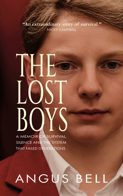
The Lost Boys: A memoir or survival, silence and the system that failed generations by Angus Bell is published by Darius Publishing and is available on Amazon.
Click here to find out more.
[1] Bullingdon Club old-boy Boris Johnson, never one to stick to the few principles he has, later described the club as ‘a truly shameful vignette of almost superhuman undergraduate arrogance, toffishness and twittishness’. But then he was hoping to become Prime Minister at the time…
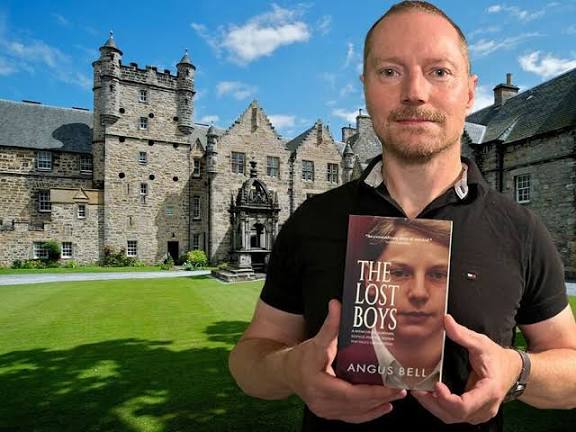
Angus Bell. 'The School' behind him
Enjoy a free no-obligation chat.
Haggle a bit. Make a booking.
Call us on +44 (0)1267 211432 or drop us a line at learn@independentthinking.co.uk.
About the author
Ian Gilbert
Ian Gilbert is an award-winning writer, editor, speaker, innovator and the founder of Independent Thinking. Currently based in Finland, he has lived and worked in the UK, mainland Europe, the Middle East, South America and Asia and is privileged to have such a global view of education and education systems.