
On the Death of a Parent
Advice for schools everywhere
'Primary health and wellbeing: content to be covered by the end of primary…
8. That change and loss, including bereavement, can provoke a range of feelings, that grief is a natural response to bereavement, and that everyone grieves differently.'
The new PSHE requirements come into play in England later this year with a requirement to cover loss and bereavement by the time children leave primary.
A subject close to our heart, here is the original list of suggestions and recommendations for schools that Ian Gilbert drew up with his three children following the loss of their mother several years ago.
The advice – based on their personal experience in primary, secondary and FE – formed the basis of Independent Thinking on Loss.
It is a book that is heartfelt, frank and honest and has helped thousands of educators as they come to terms with supporting children and students when the worst happens.
Have a read and see what you think:
1. As soon as the death is known to the school have a senior member of staff talk to the immediate classmates about what has happened. Stamp out any gossip and offer support for those who may be affected.
2. Send a card and encourage classmates to do the same – saying ‘I didn’t know what to do’ and doing nothing is a form of moral cowardice (and why should you be let off the hook. No-one else knows what to do either).
Teach other children to know what to say
3. When the child comes back to school talk to them (but don’t patronise. Ask them what they would like their teachers to do).
4. Teach other children to know what to say and how to handle things.
5. School can be the place to escape from what is going on at home (‘Home is home and school is school’).Respect that wish as much as possible.
6. Grieving is mentally and physically exhausting.
Talk to the spouse
7. Be tolerant of homework and other work commitments – evenings may well be spent grieving and talking, not working. Agree work commitments with the child, though, and be firm but caring as you try and ensure they don’t get too far behind (and add a feeling of failure to their grieving).
8. Talk to the spouse if they come to the school – show them you know and care and are there to help. Don’t just ignore them because you don’t know what to say – that’s more moral cowardice.
Remember the anniversaries
9. Keep on talking to them and letting them know you still remember, even just in small ways.
10. Remember the anniversaries.
11. Be aware of areas that you may cover in the curriculum that may bring back memories (Mother’s Day, Father’s Day, birthdays, life after death in RE, areas that touch on any illness such as cancer or mental illness...).
12. When another parent dies in the school, make sure you are mindful of other children who have lost parents as it will bring memories back.
Amputation
13. Learn about helping children cope with bereavement from various agencies out there such as Child Bereavement UK (who have just joined forces with Winston's Wish).
14. Time heals in bereavement as much as it does following an amputation. It is just what you go through to come to terms with things better.
You can get hold of a copy of Independent Thinking on Loss (and we firmly believe every school should have one) with 20% off and free UK p+p when you buy it direct from the publishers. Just use the code 'ITL20' at checkout.
In the second edition of the book, with Ian’s children grown up and out in the world, this is the message his youngest had for teachers everywhere:
“Respond at all times with love and support.
Notice when we are there.
Notice when we are not there.
Offer to sit with us.
Maybe listen to a song that is just too hard for us to hear alone.
Offer us a cuppa.
Take the time to learn about our pain, even if it just means listening.
Take time to ask about our lost loved one.
And, most importantly, allow us to find a reason for our pain and choose happiness again.”
Thank you for reading. [ITL]
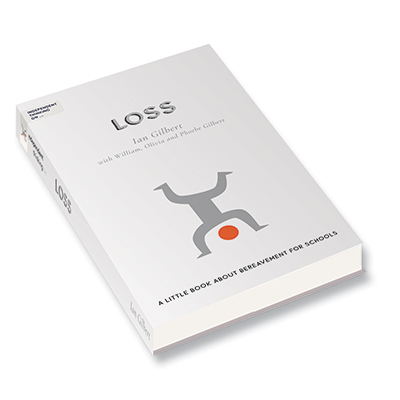
Independent Thinking on Loss by Ian, William, Olivia and Phoebe Gilbert
Enjoy a free no-obligation chat.
Haggle a bit. Make a booking.
Call us on +44 (0)1267 211432 or drop us a line at learn@independentthinking.co.uk.
About the author
Ian Gilbert
Ian Gilbert is an award-winning writer, editor, speaker, innovator and the founder of Independent Thinking. Currently based in Finland, he has lived and worked in the UK, mainland Europe, the Middle East, South America and Asia and is privileged to have such a global view of education and education systems.